
A tidy office and a hygienic one are not the same thing, and the gap between them is where most workplace illness transmission happens. Bins emptied and surfaces wiped produce an environment that looks maintained. Whether the door handles, lift buttons and shared keyboards have been disinfected is invisible to everyone. Understanding how professional office cleaning services singapore providers deliver actually affect health means separating appearance from the outcomes that matter.
Where Transmission Actually Happens
Respiratory and gastrointestinal illness spreads through a small number of well-understood routes. Frequently touched surfaces door handles, lift buttons, shared printers, meeting room controls, pantry taps and microwave handles, hot-desk keyboards collect and transfer contamination between many people daily. Washrooms concentrate risk further. Pantries combine food handling with shared equipment. Poorly maintained ventilation redistributes airborne particles. Effective hygiene concentrates effort on these points rather than distributing it evenly across floor area.
Cleaning and Disinfection Are Two Steps
This distinction is routinely collapsed and it matters. Cleaning removes visible soil and a proportion of the microbial load mechanically. Disinfection kills what remains, and it only works on an already-clean surface applying disinfectant over soil largely wastes the product. Contact time is the other half: most disinfectants require the surface to stay visibly wet for a stated period, and wiping dry immediately renders the application ineffective. A cleaner who sprays and wipes in one motion has cleaned the surface but not disinfected it.
Specifying Touch Point Frequency
The practical improvement most offices can make is separating touch point disinfection from general cleaning in the specification, with its own frequency. In a busy workplace that might mean twice daily for washroom fixtures, lift buttons and main door handles, and daily for meeting rooms and pantry equipment. Written into the schedule and monitored, this happens consistently. Left as an implied part of general cleaning, it happens when time allows, which in practice means intermittently.
Washrooms Deserve Disproportionate Attention
Washrooms drive both hygiene outcomes and occupant perception more than any other area. Adequate servicing frequency, consistently stocked soap and drying facilities, and attention to floors, taps and door handles all matter. Hand drying is worth thinking about explicitly, since hands left damp transfer considerably more organisms than dry ones. Providers who also handle industrial cleaning services singapore facilities require tend to be rigorous about washroom protocols, because the standards expected in food and manufacturing environments are higher than typical office practice.
Equipment Determines Whether Dust Is Removed
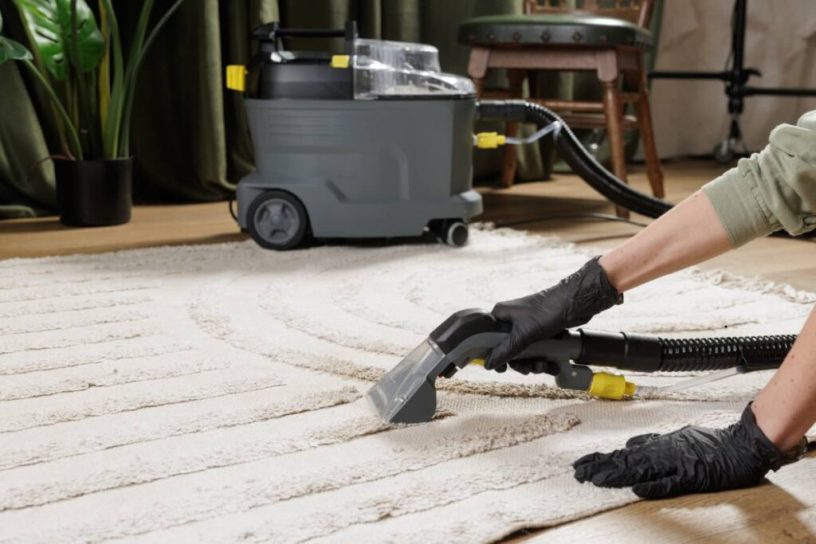
Vacuum filtration is the single most overlooked factor in office air quality. A machine with degraded or poorly specified filtration collects coarse debris and exhausts fine particulate back into the room, which is why some offices report dustiness that persists no matter how often cleaning occurs. HEPA-grade filtration retains the fine fraction. Colour-coded microfibre cloths, laundered rather than rinsed, prevent transfer between washrooms, pantries and desk areas an inexpensive control that many contracts omit entirely.
Pantries and Shared Food Areas
Pantries combine everything problematic: food residue, shared equipment, warm environments and multiple users with varying habits. Sink areas, microwave interiors and handles, fridge seals and shelves, and communal utensils all need scheduled attention rather than being left to occupant goodwill. Fridge clear-outs on a defined cycle prevent the accumulation that eventually produces both odour and pest interest, and they are far easier when scheduled than when prompted by a complaint.
Ventilation and the Wider Environment
Air handling affects hygiene independently of surface cleaning. Filters that are not changed on schedule, ducting that accumulates dust, and cooling systems that produce condensation all contribute to complaints about air quality and to genuine health effects. This sits at the boundary between cleaning and building maintenance, and it frequently falls between the two. Establishing which party is responsible avoids the situation where neither addresses it.
Making Standards Visible
Hygiene outcomes are invisible, which is why they need measurement. A monthly inspection against the written specification, scored and shared, keeps performance from drifting. Some organisations use surface testing to verify disinfection effectiveness in high-risk areas, which converts an assumption into evidence. Reviewing the types of commercial cleaning services available helps clarify which of these belong in a routine contract and which are specialist additions.
The Business Case
Reduced absence is the obvious benefit and the hardest to attribute precisely. The clearer arguments are the ones occupants notice: washrooms that are consistently stocked and clean, pantries that do not smell, air that does not feel dusty, and an environment that signals the organisation takes basic care of the people in it. Those perceptions affect how staff and visitors read the business, and they are produced by exactly the details that a specification either captures or leaves to chance.
The practical starting point for most organisations is a short audit rather than a new contract. Walk the premises and list the touch points, check what the current specification actually says about them, look at the vacuum filtration, and ask when the pantry fridge was last cleared. That exercise takes an hour and usually identifies two or three gaps that can be closed by varying the existing arrangement rather than replacing it which is both faster and considerably cheaper than starting over.

